Flooring is the one part of your home you experience with every single step. High-traffic rooms ask more of that experience than anywhere else, absorbing the daily rhythm of footsteps, spills, and everyday life.
Whether you're drawn to the warmth of engineered hardwood or the refined durability of luxury vinyl plank, our flooring team has spent years helping homeowners navigate exactly this kind of decision. Let's explore what makes flooring truly durable and how to find the material that elevates your home while standing up to real life.
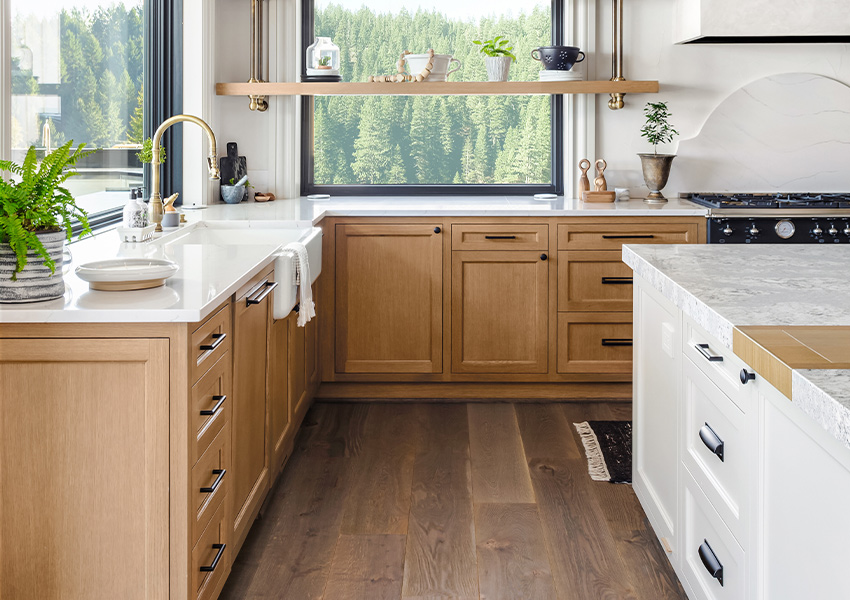
Not all flooring is built to handle constant movement, and the difference often comes down to what's happening beneath the surface.
Think of these three factors as the structural bones of a floor. The finish is what you see, but wear layer, density, and moisture resistance are what determine how that finish holds up over time.
Here's a closer look at the materials best suited for busy spaces, so you can choose with confidence.
Luxury vinyl plank is one of the most popular picks for busy households, and it's easy to see why. It stands up to scratches, resists water completely, and mimics the look of natural wood or stone. It's soft underfoot, quiet to walk on, and forgiving if something gets dropped. For hallways, family rooms, or any space that sees kids and pets daily, it's a dependable choice.
Laminate shares many of vinyl's strengths, particularly its scratch resistance and easy upkeep. It has a slightly different feel underfoot and can be a great option for spaces where you want a wood look with straightforward maintenance. It performs best in areas with lower moisture exposure than vinyl, so it's better suited to living rooms and hallways than kitchens or bathrooms.
Porcelain tile provides serious durability, especially in spaces that deal with heavy foot traffic and moisture at the same time. Its dense composition resists scratching and staining, and it holds up beautifully in entryways, kitchens, and mudrooms. Tile also opens the door to bold pattern and color choices that can make an entryway feel like a true design statement.
Engineered hardwood offers the warmth and character of hardwood with added structural stability, thanks to layered construction that resists expansion and contraction. It works well in moderate to high-traffic living spaces, though it's not the best match for areas with heavy water exposure.
Natural stone, like slate or travertine, brings an elevated, one-of-a-kind character that few other materials can match. It's dense, long-wearing, and ages with a kind of patina that only adds to its charm. Stone tends to shine in statement spaces such as grand entryways or open-concept living areas where its texture and depth can really be appreciated.
Not sure which material would fit your space best? Our innovative Room Visualizer tool lets you upload a photo of your entryway, kitchen, or living space and preview how different flooring options would look in your home. It's the easiest way to see your options come to life before making a single decision.
Every room in your home asks something different of its floor, and finding the right fit starts with understanding what each space truly needs.
This year's flooring trends lean into texture and depth, proving that durability and high design can absolutely coexist.
Even the most durable flooring benefits from a little care. A few simple habits go a long way toward protecting your investment in the long run.
Choosing the right floor for your busiest rooms is a decision worth getting right, but you don't have to navigate it alone. Our team has spent years helping homeowners pair beautiful materials with real, everyday living, guiding countless design plans from first inspiration to finished space. Ready to find your perfect floor? Connect with one of our flooring experts today and discover a solution that's as beautiful as it is built for your life.
Yes. Its wear layer, water resistance, and scratch resistance make it one of the most dependable choices for busy households, especially in hallways, kitchens, and entryways.
Luxury vinyl typically has the edge in moisture-prone spaces since most styles are fully water-resistant, while laminate is a strong pick for drier, high-traffic rooms like hallways and living areas.
Porcelain tile and natural stone are generally considered the most durable options, thanks to their dense composition and resistance to scratching, staining, and moisture. For a blend of strength and warmth, engineered hardwood and luxury vinyl plank offer excellent durability while bringing more softness underfoot.