Hardwood flooring has a way of transforming a room. It adds warmth, depth, and a sense of permanence that no other material can quite match. But when it comes time to choose, most homeowners find themselves facing the same question: engineered hardwood or solid hardwood?
Both can serve as the foundation for a truly stunning interior. The difference lies in how they are built, where they perform best, and what they can offer your home over time.
This guide breaks down the key differences between engineered and solid hardwood flooring so you can move forward with confidence. Whether you are renovating a single room or designing an entire home, we're here to help you understand what each floor brings to the table. Read on to explore the details behind each option and find the floor that brings your design vision to life.
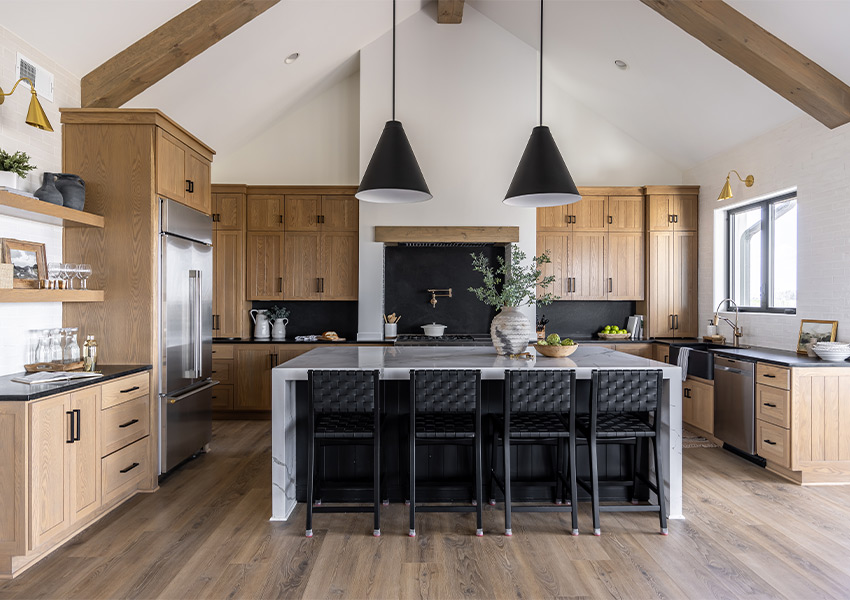
Before you can compare performance, style, or installation, it helps to understand what each floor actually is. Here's a closer look at how engineered and solid hardwood are constructed.
Solid hardwood is exactly what it sounds like. Each plank is milled from a single piece of wood, from the surface you walk on all the way through to the bottom. There are no layers, no cores, and no additives.
That simplicity is part of what makes solid hardwood so enduring. The grain, the texture, and the character of the wood runs all the way through each plank. It's a floor that rewards you with authenticity at every level.
Engineered hardwood is also made with real wood, but its construction tells a different story. Each plank features a genuine wood veneer on top, called the wear layer, bonded over a core of cross-layered plywood. Those alternating layers work together to keep the plank stable as temperatures and humidity levels shift throughout the year.
The result is a floor that delivers the same warmth and beauty of real wood with greater dimensional stability. Engineered hardwood's added stability can open the door to more rooms, more subfloors, and more design possibilities.
Both engineered and solid hardwood are built to last. However, they hold up differently depending on your household, your climate, and how much daily activity your floors see.
Solid hardwood is one of the most durable flooring options available. Because each plank is made from a single piece of wood, it has a significant thickness from top to bottom. That depth gives solid hardwood a long lifespan and the ability to be sanded and refinished multiple times over the years, restoring its surface whenever wear begins to show.
For low to moderate traffic areas with stable humidity levels, solid hardwood is a great option. It develops a natural patina over time that many homeowners find adds to its character rather than taking away from it.
Engineered hardwood holds its own in high-traffic areas and more demanding environments. Its layered construction makes it more dimensionally stable than solid hardwood, meaning it is less likely to warp, gap, or buckle in rooms where humidity and temperature fluctuate.
For active households with pets, kids, or heavy foot traffic, engineered hardwood offers reliable everyday performance without sacrificing the look and feel of hardwood. Many engineered options also feature scratch-resistant finishes that stand up to the wear of daily life.
Every room in your home has its own demands. When it comes to hardwood flooring, where you install it is just as important as which option you choose.
Solid hardwood thrives in above-grade spaces with stable humidity levels. Living rooms, dining rooms, and bedrooms are ideal settings where solid hardwood can perform at its best.
However, because it's made from a single piece of wood, solid hardwood is more sensitive to moisture and temperature swings. It's not recommended for basements, over concrete slabs, or in rooms where humidity levels are difficult to control.
Solid hardwood is typically installed using a nail-down method, which requires a wood subfloor to anchor into. That installation requirement is worth factoring in early when you're planning your project.
Engineered hardwood expands your design options by working in more rooms and on more subfloor types throughout your home. Its layered construction makes it suitable for installation over concrete slabs, below-grade spaces like basements, and even over radiant heat systems. It can be installed using nail-down, glue-down, or click-lock methods, depending on the subfloor and the specific product.
For homeowners who want the warmth and beauty of hardwood in spaces that solid hardwood cannot reach, engineered hardwood is the clear answer.
Longevity is part of what makes hardwood flooring such a timeless choice. Both options are built to last, but how they age and what you can do to refresh them over time sets them apart.
One of the most compelling qualities of solid hardwood is its ability to be refinished. Because each plank is made from a single thick piece of wood, it can be sanded down and refinished multiple times over its lifetime. That means scratches, dents, and worn patches do not have to be permanent. With the right care, a solid hardwood floor can look brand new again decades after it was first installed.
For homeowners who want a floor that can evolve with their home over the long term, solid hardwood delivers that kind of staying power.
Engineered hardwood can also be refinished, though the number of times it can be refinished depends on the thickness of the wear layer. A thicker wear layer allows for sanding and refinishing just like solid hardwood, while thinner options may only support one refinishing pass. Choosing a product with a substantial wear layer is the key to maximizing longevity.
With the right product and proper care, engineered hardwood can also deliver many years of beauty and hold its own as a long-term flooring investment.
When it comes to aesthetics, both engineered and solid hardwood bring warmth, character, and timeless appeal to any interior. The real question is which one gives you the range and flexibility to fully realize your design vision.
Solid hardwood carries a sense of authenticity that is hard to replicate. The natural variation in grain, the depth of color, and the way it develops character over time make it a strong choice for interiors that celebrate the beauty of natural materials. Every plank is unique, and that individuality is part of what makes solid hardwood so visually compelling.
Popular solid hardwood options include:
Finish options like wire-brushed, hand-scraped, and wide-plank formats give you plenty of room to shape the character of your space, whether you are going for a refined traditional look or something more relaxed and organic.
Engineered hardwood offers the same species, finishes, and surface textures as solid hardwood, often with an even broader range of options. Because the wear layer is made from real wood, the look on the surface is identical to solid hardwood. Wide-plank formats in particular are well suited to engineered construction, as the layered core provides added stability for broader boards that might otherwise be prone to movement.
Popular engineered hardwood styles include:
From understated elegance to dramatic, large-format looks, engineered hardwood gives you access to the full spectrum of hardwood design with the flexibility to install it throughout your entire home.
The way a floor goes down affects everything from project timelines to long-term performance. Both engineered and solid hardwood can be professionally installed with beautiful results, but they work with different methods and different subfloor types. Understanding your options before you start is the best way to set your project up for success.
Solid hardwood is most commonly installed using a nail-down method, which requires a wood subfloor to anchor into. It's an approach that has been used for generations and delivers a floor that feels solid and secure underfoot.
A few things to keep in mind with solid hardwood installation:
Solid hardwood installation is typically a job for experienced professionals. Done correctly, it produces a floor that can last a lifetime.
Engineered hardwood offers more flexibility when it comes to installation methods, making it a versatile choice for a wider range of projects and subfloor types.
Installation options for engineered hardwood include:
That range of methods means engineered hardwood can be installed in more rooms, over more subfloor types, and in more situations than solid hardwood. It's a practical advantage that opens up more design possibilities throughout the home.
Both engineered and solid hardwood are worthy choices. They're both made with real wood, bring lasting beauty to any interior, and can serve as the foundation for a home you love. The right answer comes down to your space, your lifestyle, and your design vision.
Here is a simple way to think through the decision:
Choose solid hardwood if:
Choose engineered hardwood if:
No matter which direction you go, you don't have to figure it out alone. Our flooring experts are here to listen, guide, and help you find the hardwood floor that is made for your home. From your first question to your final selection, we are with you every step of the way. Visit your nearest showroom or request a personalized design consultation today to get started.